

Believe it or not, we live on a ball of rock spinning through space with a thin envelope of liquid water and tenuous gas. The spin of our Earth gives the illusion of the rising and setting Sun and Moon and stars, and the night sky appears to wheel around the North Star, leaving concentric star trails in long-exposure photographs. Earth’s rotation is the source of the prevailing westerly winds, which whip around the Earth’s axis as they carry the angular momentum poleward from the tropics where they picked it up from the rock below.
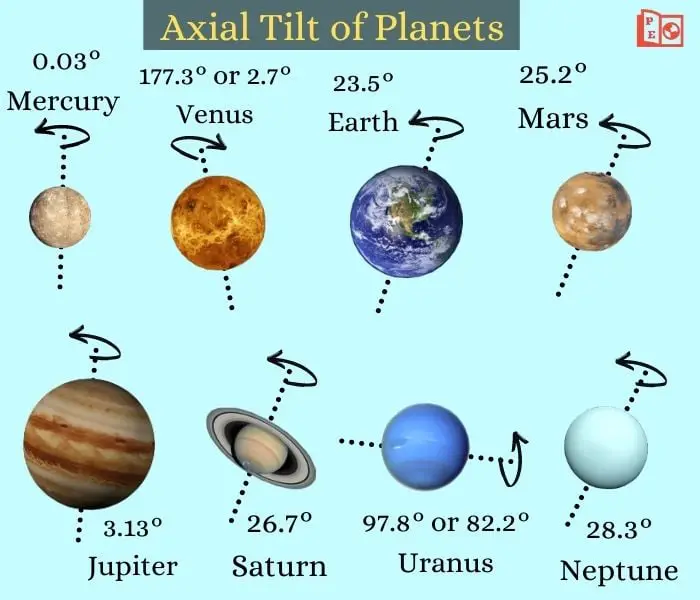
The spin of our solar system is inclined about 63 degrees to the rotation of the Galaxy itself. You can picture the solar system as a disk orbiting inside the colossal Galactic disk, but the two disks are inclined 63 degrees. By a remarkable coincidence the 23-degree tilt of the Earth’s rotation relative to the solar system, plus the 63-degree tilt of the solar system compared to the galaxy, means that the direction of the North Star is almost straight out of the plane of our Galaxy! When we look toward the North Star we are looking almost straight out of the Galaxy and into intergalactic space.
Beyond the planets of our solar system, 5 light-hours and more from the inner furnace, lies a realm of icy bodies made of the same stuff that forms the gas giantsJupiter and Saturn, but in solid form. Thousands of them orbit in the dim reaches of the Kuiper Belt. These ice chunks include Pluto and Eris and Ultima Thule, recently visited by NASA’s New Horizons mission. Beyond the Kuiper Belt stretches the Oort Cloud, a diffuse sphere of billions of comets. These chunks of carbon, oxygen, and hydrogen stretch halfway to the nearest star, and are connected by the barest tendrils of gravity to the central pucker in space formed by the Sun.